Budo: Koryu and Gendai
Gendai Budō, Modern Martial Arts
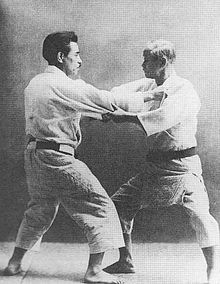
Budō is a term used for Japanese martial arts; in our part of the world, Jūdō, Karatedō, and Aikidō are particularly well-known. However, Budō also encompasses armed arts such as Kendō, Iaidō, Naginatadō, and Kyūdō.
What all these arts have in common is that they are grouped together under the term Gendai Budō, which translates to “modern martial arts.” All of these arts, in their present form and organization, only emerged after the Meiji Restoration, in conjunction with the abolition of the Japanese sword-bearing nobility* and the 1876 ban on carrying swords in public. Therefore, in most cases, they are actually quite modern.
Naturally, these modern martial arts did not appear out of nowhere; in every case, their founders were experienced experts in much older fighting methods.
Koryū: The Ancient Traditions of the Samurai
In contrast, all martial arts that originated before the year 1876 are referred to as Koryū Budō [martial arts flowing from the past], or synonymously as Kobudō or Koryū Bujutsu. They emerged during a time when wielding a sword was still commonplace.
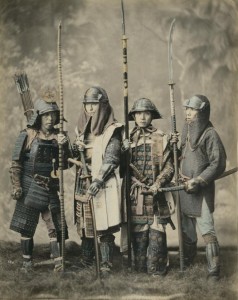
The Shintō-ryū taught at Kobukai-Berlin e.V. is one of the oldest of these martial arts and originated during a time of civil war. Its primary purpose was to prepare its followers for the battlefield and the use of various weapons to ensure their survival.
Therefore, in Shintō-ryū, and also at Kobukai-Berlin e.V., practitioners are not limited to a single type of weapon. Instead, they learn a broad range of skills, with the sword at the center of it all.